It’s National Sewing Machine Day!
Note: This post may contain affiliate links. That means we may earn a commission at no additional cost to you if you purchase via our links. Not all links are affiliate links. I only recommend products I use and trust. As an Amazon Associate, I earn from qualifying purchases.
National Sewing Machine Day is celebrated every year on June 13. It’s an unofficial holiday that honors one of the most important inventions in textile and clothing history: the sewing machine.
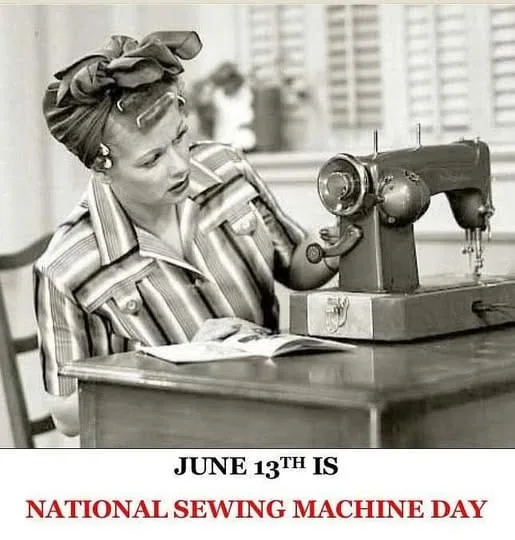
Why June 13?
The date is thought to be the date the first patent for a sewing machine design was granted English inventor Thomas Saint in 1790. Although the British patent described a machine for “quilting, stitching, and sewing”, his machine was intended for sewing leather and canvas. Instead of a conventional eye-pointed needle, Saint’s design used an awl or pin to pierce a hole in the material; a separate needlelike or forked rod then carried the thread through that hole.
It formed a single-thread chain stitch: each new loop passed through the previous one on the underside, locking the stitch into a chain. A tensioning system controlled the thread, and a looper or hook mechanism below helped form and secure the chain stitch. The design included a feed mechanism to move the material forward between stitches, though it was only really adequate for relatively short lengths of leather. That could be why the device was never actually made.
The History of the Modern Sewing Machine
Elias Howe patented a lockstitch sewing machine in the United States in 1846, covering the key combination of an eye‑pointed needle and a shuttle forming a lockstitch.
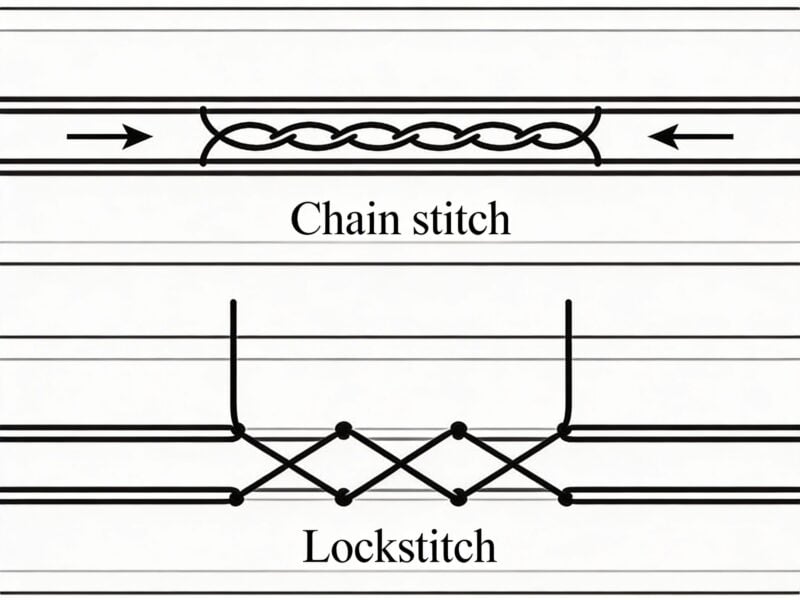
Singer later developed his own machine that used the same fundamental lockstitch mechanism as Howe’s, while adding improvements such as a practical up‑and‑down needle motion and a treadle stand that made the machine far more usable.
Howe sued Singer for patent infringement; Singer argued that Howe’s idea wasn’t original and tried to point to earlier works. The legal battle ended with the courts siding with Howe: Singer’s machine was held to infringe Howe’s valid patent on the lockstitch mechanism. Singer was ordered to pay Howe a lump‑sum settlement plus ongoing royalties for each sewing machine sold.
Rather than destroying Singer’s business, the decision pushed the major patent holders (including Howe and Singer) to form a “sewing machine combination” patent pool in 1856, where they cross‑licensed each other’s patents and collected royalties from outside manufacturers.
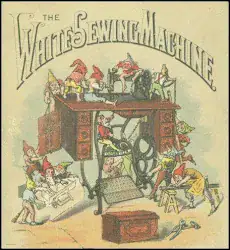
The Sewing Machine Sparks a Revolution
Before machines, sewing clothing by hand was slow and exhausting. A skilled seamstress might spend 10 to 14 hours hand-sewing a single shirt. With a sewing machine, the same work could be done in a fraction of the time. That jump in productivity made sewing a viable way to earn steady income. Dressmakers, milliners, and tailors could work from their homes or small shops, sewing custom clothing for neighbors and local customers.
As ready-made clothing became popular in the mid-1800s, manufacturers began sending cut fabric pieces to women to sew at home. This system, called piecework, paid workers per item completed. Many women could now earn money while still managing household responsibilities. It wasn’t glamorous and the pay was often low, but it provided one of the few income sources available to women who were not factory workers or domestic servants.
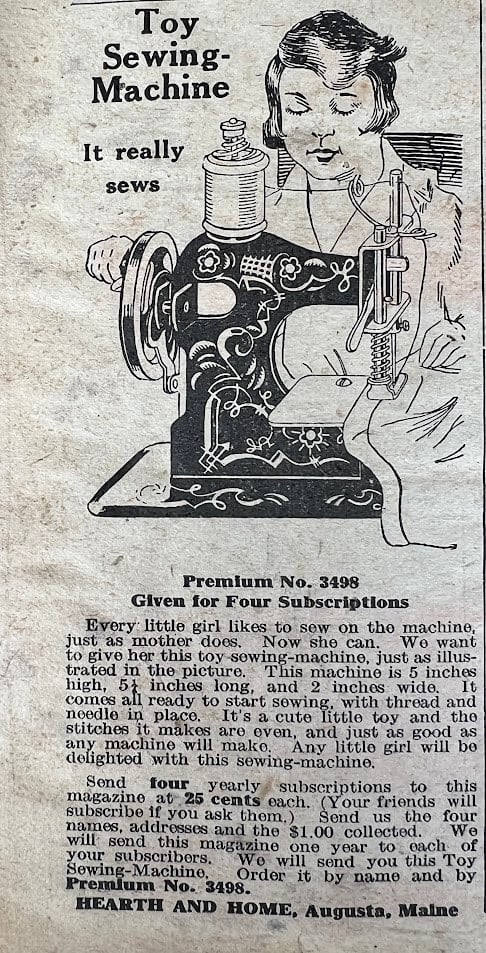
Sewing machines also helped create the modern garment industry. Clothing factories needed operators to run rows of machines producing shirts, uniforms, and dresses. Large numbers of women filled these roles. By the late 1800s, women made up the majority of garment workers in many cities. This had a ripple effect. Women began organizing for better wages and safer conditions, which led to important labor reforms in the early 1900s.
Even women who were not earning wages benefited economically. Sewing machines allowed families to repair clothing, make garments, and reuse fabric, stretching household budgets.
Celebrate the Day!
Here are some ideas:
- Sewing a new project or starting a quilt
- Sharing sewing tips or photos of finished work on Make Believe Quilters
- Cleaning and maintaining your sewing machine
- Gathering with other sewists for a sewing day or class – find a local quilt shop here
Around quilting circles, the celebration usually boils down to one simple rule:
The best way to honor your sewing machine is to actually turn it on.